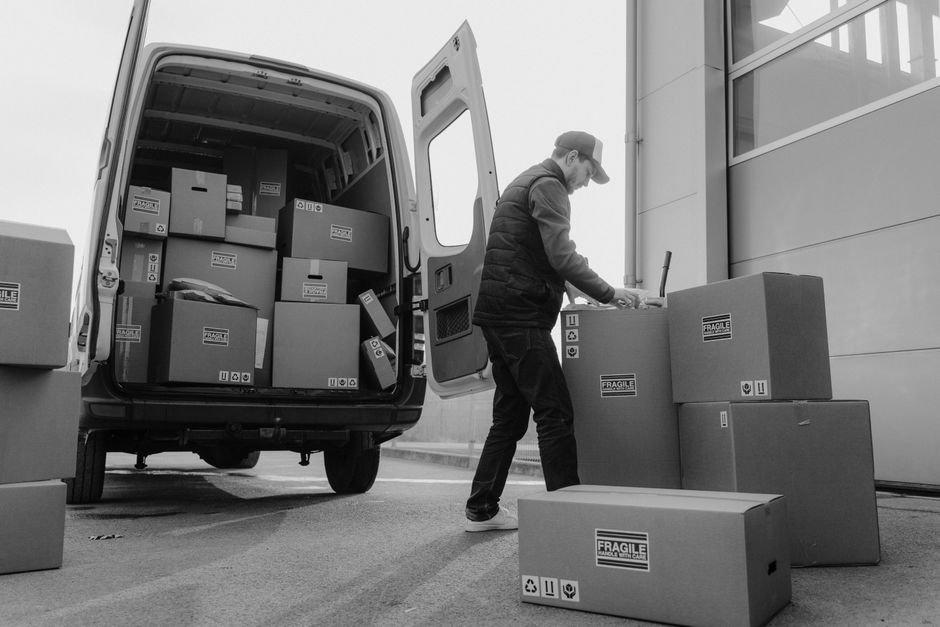
How Woolwich man and van teams handle narrow access roads

Narrow streets, tight turns, parked cars, and awkward front doors can turn a simple move into a bit of a puzzle. In Woolwich, that happens more often than people expect. If you are wondering how Woolwich man and van teams handle narrow access roads, the short answer is: with planning, the right vehicle choice, careful loading, and a calm approach to the final few metres. That last bit matters more than most people realise.
This guide explains what actually happens on moving day, why access checks are so important, and how experienced crews keep your move efficient without risking damage, delays, or stress. If you live in a terrace, a maisonette, a new-build with limited turning space, or anywhere with old-school London road layouts, this one is for you.
Why How Woolwich man and van teams handle narrow access roads Matters
Narrow access is not just an inconvenience. It affects vehicle choice, parking, carrying distance, time on site, and the chances of accidental scuffs on walls, railings, kerbs, or door frames. A standard moving van that would be perfect on a wide suburban street may be the wrong fit for a tight Woolwich cul-de-sac or a road with heavy daytime parking.
That is why access planning sits at the centre of a smooth move. A team that knows how to work with restricted access can reduce back-and-forth trips, avoid last-minute vehicle swaps, and protect your belongings more effectively. To be fair, a lot of moving stress comes from people assuming the van will simply "fit somehow". Sometimes it does. Sometimes it really doesn't.
For local moves, the difference can also affect neighbours and building managers. If a crew blocks the road for too long or needs repeated manoeuvres, the whole street feels it. A better-prepared team keeps things tidy, quicker, and more respectful of the area.
When access is tight, the move becomes less about brute force and more about coordination. That is the real skill.
How How Woolwich man and van teams handle narrow access roads Works
In practice, experienced crews deal with narrow access by breaking the move into small, manageable decisions. First they assess the route. Then they match the vehicle to the road and property layout. After that, they decide whether to park directly outside, stop at the nearest safe point, or use a shuttle method with smaller loads.
Here is the usual working method, in plain English:
- Pre-move access check: The team asks about road width, turns, parking restrictions, height limits, steps, and entry points.
- Vehicle matching: They choose a van size that fits the route rather than forcing the biggest van available.
- Load planning: Heavy and awkward items are loaded in a sequence that makes repeated short carries practical.
- Safe parking position: If the van cannot sit directly outside, it is parked at the nearest sensible location.
- Shuttle carrying: Boxes and furniture are moved in stages, often using trolleys or straps where suitable.
- Final protection: Corners, bannisters, and door edges are handled carefully to avoid damage during repeated trips.
Sometimes the access problem is not the road itself but the mix of road width, parked vehicles, and turning space. A street might look fine on foot and be a nightmare for a van. That is why a quick photo or short video from the customer can be so helpful. It saves guesswork and makes the plan realistic from the start.
Teams that offer man and van support often rely on this kind of flexible approach because local jobs are rarely one-size-fits-all. The right plan is usually the simplest one that safely gets the job done.
Key Benefits and Practical Advantages
Good narrow-access handling is not just about avoiding drama. It brings real practical advantages that you can feel on the day.
- Less damage risk: Fewer tight manoeuvres usually means fewer scrapes, knocks, and mishaps.
- Faster completion: When the route is planned properly, there is less faffing about with the van.
- Better cost control: Efficiency can reduce the time needed on site, which helps keep the move sensible.
- Less lifting stress: Using the nearest safe parking point and the right equipment reduces unnecessary strain.
- More flexibility: Smaller vehicles and shuttle loading can work where larger lorries would struggle.
- More reassurance: You know the crew has thought through the awkward bits before they become a problem.
For customers moving out of flats or shared buildings, that flexibility can be especially useful. A crew may pair access planning with flat removals or even student removals where stairwells, narrow entrances, and limited parking all come together in one charming little headache.
There is also a quieter benefit: a well-handled move tends to feel calmer. You notice it in the small things. Less shouting. Less waiting. Fewer anxious glances at the wing mirror. Honestly, that calm has value.
Who This Is For and When It Makes Sense
This approach makes sense for anyone moving in or out of a property with access limits, but it is especially relevant if you are in an older street, a densely parked road, or a building where the entrance is tucked away from the main carriageway.
It is a strong fit for:
- terraced houses on narrow residential roads
- flats above shops or in busy side streets
- house moves with limited driveway space
- office relocations in compact commercial areas
- single-item jobs like bulky furniture or piano moves
- same-day moves where there is little time for improvising
If your move is straightforward and the van can park directly outside, access planning still helps. If your situation is awkward, it becomes essential. The same goes for people moving into storage while waiting for access at the new place to improve; using storage can sometimes reduce the pressure and allow the move to happen in stages.
For businesses, the issue can be even more sensitive. An office move with narrow loading access can affect staff timings, building rules, and customer traffic. In those cases, structured commercial moves or dedicated office removals planning makes a lot of sense.
Step-by-Step Guidance
If you want the smoothest possible move through a narrow road, a simple process works better than winging it. Here is how a capable team typically handles it.
- Share clear access details early. Tell the team about road width, parked cars, one-way systems, gates, steps, or turning challenges.
- Send photos if asked. A few images of the street, the front of the property, and the entrance can make a huge difference.
- Confirm the items being moved. Large wardrobes, sofas, beds, and awkward appliances change the plan quite a bit.
- Choose the right vehicle type. A smaller van can be smarter than a larger one if access is tight.
- Agree the parking point. Know where the van can stop safely if it cannot sit outside the door.
- Prepare the route inside the property. Clear hallways, remove loose mats, and keep doors open where possible.
- Use the right packing method. Good packing reduces delays, breaks, and awkward oversized loads.
- Build in extra time for the carry distance. Even 20 or 30 extra metres changes the rhythm of the day.
If you are booking a broader household move, it helps to look at the full service picture rather than just the van. Pairing access planning with home moves, house removals, or a trusted house removalists team means the access issue is handled as part of the whole move, not as a last-minute add-on.
One small but useful point: if your road has only a narrow window for stopping, the team may need to work quickly and quietly. That is normal. The good crews are not flustered by it. They just keep moving.
Expert Tips for Better Results
There are a few things that make narrow-access moves noticeably easier. Not dramatic, just sensible. The sort of thing you only learn after doing this a lot.
- Be honest about the access. Do not downplay the problem. A "slightly tight" road can turn out to be proper awkward.
- Tell the team about repeat trips. If the van cannot park outside, factor in the shuttle work from the start.
- Keep the entrance clear. Shoes, bins, prams, and random hallway clutter slow everything down.
- Label fragile items clearly. Tight access means more handling, so clarity matters.
- Think about neighbours and timing. Early mornings may be calmer; busy school-run periods often are not.
- Use smaller boxes for heavy items. Narrow stairs and long carries make oversized boxes a nuisance.
For moves involving specialist items, the access plan has to be even tighter. A piano removals job, for example, is not just about weight. It is about angles, grip, floor protection, and a route that will not force an ugly pivot halfway up a step. Same story for furniture-heavy jobs, where furniture removals or furniture pick up work best when the access route is thought through in advance.
And a small human truth: the more awkward the street, the more valuable a calm crew becomes. Noise solves very little. A measured approach usually wins.
Common Mistakes to Avoid
Narrow access problems are often made worse by simple avoidable errors. A few of them are very common.
- Booking the wrong vehicle size. Bigger is not always better. Sometimes it is just harder to manage.
- Assuming there will be space on the day. Parking in London can change by the hour.
- Not measuring awkward furniture. That wardrobe you have had since uni may look modest until it meets a tight corner.
- Leaving packing until the morning. Rushed packing creates slow, uneven loading.
- Forgetting about stairs and internal turns. Access issues do not stop at the pavement.
- Hiding the worst bit of the access. It always comes out eventually, usually at the least convenient moment.
People also forget that access is not only about the vehicle. If a move includes a lot of boxed contents, a few extra minutes spent on packing and boxes or packing and unpacking services can save far more time later. In tight spaces, tidy packing is a real operational advantage, not a nice-to-have.
Let's face it, nobody wants to discover that the sofa goes through the front gate but not around the corner.
Tools, Resources and Recommendations
You do not need a toolkit that looks like a contractor's van exploded. But a few practical items and habits make narrow-access moves much safer and smoother.
| Tool or approach | Why it helps | When it is most useful |
|---|---|---|
| Compact van planning | Improves manoeuvrability on tight roads | Terraces, side streets, restricted parking |
| Furniture blankets and straps | Protects items during repeated carries | Longer carry distances, narrow hallways |
| Dolly or sack truck | Reduces lifting where surfaces allow | Boxes, appliance moves, short flat routes |
| Pre-move photos | Lets the team judge access properly | Any unfamiliar street or building |
| Room-by-room packing labels | Makes shuttle loading and unloading quicker | Full house and office moves |
When choosing help, it is worth looking at the broader service fit as well. Some customers want a straightforward removal van for a compact local job. Others need a wider service range, such as removal services or even a more specialised removal truck hire option if access is difficult but the volume is high enough to justify it.
If speed matters, same-day support can sometimes work, especially for smaller jobs. But a same-day move on a narrow road needs good communication, not guesswork. That bit is non-negotiable, really.
Law, Compliance, Standards, or Best Practice
With narrow access roads, compliance is mostly about safety, parking awareness, and responsible handling. No one wants a move that creates a hazard for pedestrians, cyclists, or neighbours, especially on a busy Woolwich street where foot traffic can be constant.
In practical terms, good teams follow normal UK moving best practice by:
- parking only where it is safe and lawful to do so
- keeping walkways and building entrances as clear as possible
- using sensible manual handling methods
- protecting property surfaces during loading and carrying
- working within the limits of the road, not against them
Insurance matters here too. If access is tight, the chance of incidental damage rises a little, even with careful crews. That is why it is sensible to check insurance and safety arrangements and understand the provider's health and safety policy. A trustworthy firm should be able to explain how they reduce risk without sounding vague or defensive.
You may also want to review terms and conditions, especially if access restrictions could affect timing or loading assumptions. Good admin is boring until it saves the day. Then it is brilliant.
Options, Methods, or Comparison Table
There is more than one way to manage a move through a narrow road. The best choice depends on the property, the load, and how much space is actually available outside.
| Method | Best for | Pros | Trade-offs |
|---|---|---|---|
| Direct van-to-door loading | Short, clear access | Fastest and simplest | Not possible on many narrow roads |
| Near-point parking | Moderately tight access | Balanced speed and practicality | Longer carry distance |
| Shuttle loading | Very narrow or obstructed roads | Flexible and realistic | More labour and time on site |
| Smaller vehicle choice | Restricted streets or tight turns | Easier manoeuvring | May need more trips |
| Staged move with storage | Complex access or timing issues | Reduces pressure on moving day | Requires an extra planning step |
For some households, the answer is a simple local move using a flexible man with a van arrangement. For others, the challenge is part of a broader relocation, and the right answer may be a full removals plan with better scheduling, extra crew, or staged loading.
If you are unsure which option fits, a quick quote conversation usually clears it up fast. No drama. Just honest planning.
Case Study or Real-World Example
Picture a small two-bed flat in Woolwich accessed via a narrow residential road with parked cars on both sides. The front door opens onto a tight hallway, and there is no driveway. On paper, it looks like a straightforward local move. On the ground, it is more like a logistical tidy-up.
The crew arrives with a van sized for access rather than maximum capacity. They check the road, pick the safest legal stopping point, and protect the entrance before moving a single box. Sofas and bed frames are carried in sections where possible. The heaviest items are loaded first, while boxed household goods are grouped by room to keep the unloading smooth. A few awkward turns inside the property slow things down, but not enough to cause a problem.
Nothing dramatic happens. Which, in removals, is usually the sign of a job done well.
Now imagine the same move if the access had not been discussed properly. The wrong van turns up. Parking is impossible. The team has to improvise. Suddenly that "easy" move eats up time and patience. It is not hard to see why narrow-access planning is so valuable.
We see a similar pattern with home moves and smaller specialist jobs. Even when the load is modest, access can be the real challenge.
Practical Checklist
Use this checklist before the moving team arrives. It is simple, but it covers the bits that matter.
- Measure the width of the road or access point if you can.
- Tell the team about parked cars, bollards, gates, or height restrictions.
- Share photos of the street, entrance, stairs, and any tight corners.
- List any large or awkward items separately.
- Confirm whether the van can stop outside or only nearby.
- Check if you need a loading bay, permit, or building permission.
- Pack boxes securely and keep heavy items in smaller boxes.
- Clear hallways, landings, and entrance areas.
- Keep keys, building codes, and contact details ready.
- Allow extra time if the move involves shuttle carrying.
For business customers, add a few more items: building access hours, lift bookings, reception contact details, and whether the move needs to happen outside normal office times. That extra bit of admin saves headaches later. I know, nobody loves admin. Still worth it.
Get a free quote today and see how much you can save.
Conclusion
How Woolwich man and van teams handle narrow access roads comes down to judgement, not luck. The best teams do not try to bulldoze the problem. They assess the road, choose the right van, plan the parking, carry smartly, and keep the whole move moving at a realistic pace.
That approach protects your belongings, reduces stress, and makes awkward London access feel much more manageable. Whether you are moving from a flat, a family home, an office, or simply shifting a bulky item, the right access plan can be the difference between a messy day and a smooth one.
If there is one takeaway here, it is this: tell the truth about the access, early. A good crew can work with narrow roads. What they cannot work with is surprise.
And when the van finally pulls away and the street is quiet again, that tiny moment of relief feels very good indeed.
Frequently Asked Questions
How do man and van teams know if a narrow road is workable?
They usually judge it from your description, photos, and a quick look at the likely parking and turning space. If it sounds borderline, they will often suggest a smaller vehicle or a shuttle plan rather than guessing.
What happens if the van cannot park right outside my property?
The team will normally park at the nearest safe and legal point and carry items the rest of the way. That is common in Woolwich and other busy London areas, so it is not unusual at all.
Will a smaller van always be better for narrow access roads?
Not always. Smaller vans are easier to manoeuvre, but if you have a lot to move, the team may need to balance access with load size. Sometimes a medium van with a careful loading plan is the best compromise.
Should I send photos before the move?
Yes, if asked. Photos of the road, entrance, steps, and any tight corners help the crew make a more accurate plan. A minute or two with your phone can save a lot of muddle later.
Do narrow access roads make a move more expensive?
They can, depending on the extra time, carrying distance, or vehicle adjustments involved. But it is not automatic. A clear, realistic plan can keep costs sensible. It is best to ask for a quote based on the actual access conditions.
Can you move furniture through a very tight hallway or stairwell?
Often, yes, but it depends on the size of the item and the route inside the property. Some furniture may need partial dismantling or careful angled carrying. That is where experience really helps.
What if I live on a street with lots of parked cars?
That is one of the most common access issues. The team will usually plan for nearby parking and may time arrival to reduce congestion. Early communication is the key thing here.
Is packing differently helpful when access is tight?
Definitely. Smaller, well-labelled boxes are easier to carry through narrow spaces, and they reduce the risk of damage or dropped items. Good packing makes the whole move feel cleaner and faster.
Do narrow access moves need special insurance?
They do not usually need a separate type of insurance, but it is smart to check that the provider has appropriate cover and clear safety procedures. Access challenges increase handling risk a little, so reassurance matters.
Can narrow access affect same-day removals?
Yes, because same-day work relies on quick decisions and efficient loading. If access is tight, it helps a lot to share details early so the team can bring the right van and plan the route properly.
What is the best thing I can do to help on the day?
Clear the route, keep access information honest, and be ready with keys and contact details. A calm, prepared customer makes a surprising difference. In fairness, it makes everyone's morning easier.
Where can I learn more about the company before booking?
You can read more on the about us page and review the pricing and quotes information if you are comparing your options. If you want to talk through your access issues directly, the team can also be reached through contact us.